
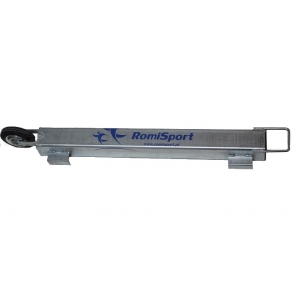
50 kg weight with a wheel
Description
Function:
The main purpose of the ballast is to prevent the goal from tipping over during play or strong winds.
The attached wheel also enables easy movement of the goal around the field.
Material:
Ballast body: Made of metal (galvanized steel), offering weather resistance and high durability.
Filling: Filled with concrete to achieve the required weight.
Transport wheel: Made of durable plastic with a rubber coating to ensure smooth rolling and protect the surface of the pitch.
Construction:
The ballast has a rectangular block shape, approximately 100 cm long, with a well-balanced mass.
Equipped with a wheel mounted directly to the unit for ease of transport.
Includes a hook or attachment point for quick fastening to the goal frame.
Mounting:
The ballast is placed at the base of the goal frame.
It can be fixed permanently or attached in a way that allows quick removal and repositioning.
The weight of the ballast alone provides sufficient stability without the need for anchoring into the ground.
Applications:
Portable football goals on hard surfaces (e.g., concrete, asphalt, artificial turf) where standard anchors cannot be used.
Training grounds and multi-use sports facilities.
Ideal for use in sports halls.
Advantages:
Stability: Prevents goals from moving or tipping, enhancing player safety.
Mobility: Thanks to the attached wheel, the goal can be moved easily by a single person.
Durability: Built from robust materials for resistance to damage and changing weather conditions.
Universality: Compatible with most portable football goals.
Maintenance-free: No need for permanent installation in the ground.
Weight:
The standard ballast weight is 50 kg.
Example Use Cases:
Portable goals placed on artificial surfaces or in sports halls where anchoring is not possible.
Training sessions in variable weather conditions, where strong winds may cause the goal to shift.
Quick relocation of goals on the field thanks to integrated transport wheels.
The main purpose of the ballast is to prevent the goal from tipping over during play or strong winds.
The attached wheel also enables easy movement of the goal around the field.
Material:
Ballast body: Made of metal (galvanized steel), offering weather resistance and high durability.
Filling: Filled with concrete to achieve the required weight.
Transport wheel: Made of durable plastic with a rubber coating to ensure smooth rolling and protect the surface of the pitch.
Construction:
The ballast has a rectangular block shape, approximately 100 cm long, with a well-balanced mass.
Equipped with a wheel mounted directly to the unit for ease of transport.
Includes a hook or attachment point for quick fastening to the goal frame.
Mounting:
The ballast is placed at the base of the goal frame.
It can be fixed permanently or attached in a way that allows quick removal and repositioning.
The weight of the ballast alone provides sufficient stability without the need for anchoring into the ground.
Applications:
Portable football goals on hard surfaces (e.g., concrete, asphalt, artificial turf) where standard anchors cannot be used.
Training grounds and multi-use sports facilities.
Ideal for use in sports halls.
Advantages:
Stability: Prevents goals from moving or tipping, enhancing player safety.
Mobility: Thanks to the attached wheel, the goal can be moved easily by a single person.
Durability: Built from robust materials for resistance to damage and changing weather conditions.
Universality: Compatible with most portable football goals.
Maintenance-free: No need for permanent installation in the ground.
Weight:
The standard ballast weight is 50 kg.
Example Use Cases:
Portable goals placed on artificial surfaces or in sports halls where anchoring is not possible.
Training sessions in variable weather conditions, where strong winds may cause the goal to shift.
Quick relocation of goals on the field thanks to integrated transport wheels.
get in touch with us
SHARE YOUR IDEAS
